
On Visiting Herbert Hoover’s Birth and Burial Place by Thomas Lux
I admire Thomas Lux’s villanelle, “On Visiting Herbert Hoover’s Birth and Burial Place,” especially because the conversational banal tone hides misfortune. At the prairie’s edge, tents flourish, a reference to Hoovervilles. His message is still relevant: “What you spent was what you earned and not a dime in banks accrued.” Like then, “so many people can’t pay their rent.” The speaker is also humble, saying if he is wrong, he ‘repent[s], but don’t too many people dream of meat in their soup?” The greater divide between rich and poor—“some eat white bread, some get screwed”— due to greed is repeated. But would we, if in power, make any difference? The confusing syntax in the middle asks, “. . . how, can we prevent our oblivion?”
Janice Zerfas
 Born May 31, 1930, to Joseph Earl Smith and Olive Birdie Jenkins Smith, she was the youngest of four children. Her early years were spent on a farm in rural Michigan. She graduated from Bay City Central and earned her teaching degree from Central Michigan University. Joye married Philip Giroux in December 1951. She taught French and English at South Lake High School in St. Clair Shores, MI and Big Rapids High School during her years as a beloved educator. She was a poet who initially wrote to ease the pain of losing her husband, Philip, to cancer in June 1969. She went on to serve as President of the Poetry Society of Michigan and publish several books. Full obituary

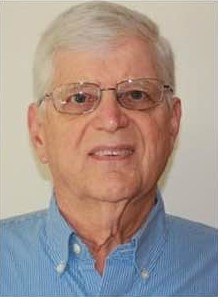 Eric Torgersen was born in Melville, New York. He has a BA in German Literature from Cornell University; after two years in the Peace Corps in Ethiopia, he earned an MFA in poetry from the University of Iowa. He retired in the spring of 2008 after 38 years of teaching writing at Central Michigan University. He lives in Mt. Pleasant, Michigan with his wife, the quilt artist
 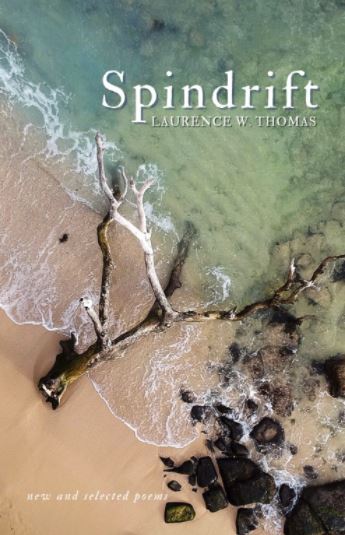 Spindrift suggests stuff blown onto beaches, beaches of discovery in one’s mind. When these poems show a squirrel, a fish, birds, a beggar, an Irish pub, or a dish we see these as metaphors which conjure up ideas or feelings from our own familiarity with them. A poem that begins as an abstraction, like an enemy or peace or patience, becomes objectified. Spindrift is comprised of whatever little gems might be found along the shore, examined closely to become part of the reader’s experience. These jottings of spindrift take off from that experience like going to an airport when you want to be someplace else – or like poems which say one thing when they mean another.
 Laurence W. Thomas is the founding editor of
