From The Mind’s Eye by Kevin Clark: Journey Poem. Write a poem in which you take a trip and end up in a place totally unexpected, perhaps a foreign countryside or in the throes of an exciting and/or suspenseful discovery. Tell the story while focusing on graphic action verbs.
Nancy Cook’s poem “Midland“, a response to the 2020 flood that made national headlines, was the winner of the Founder’s Prize in the 2020 poetry contest of the Poetry Society of Michigan.
From Western Wind, an Introduction to Poetry by Mason and Nims.Make a list of your five favorite nouns, five favorite verbs, and three favorite modifiers. Try writing a poem using all of these words in any combination.
From Writing to Awaken by Mark Matousek. Write about your relationship with routine. Are you rigidly attached to your habits? If so, which ones and why? How does attachment to routine limit your ability to be spontaneous?
Winner of the Margo LaGattuta Memorial Award in the Poetry Society of Michigan’s annual poetry contest is Randy K. Schwartz of Ann Arbor, Michigan. This poem and all of the other contest winners are featured in the latest edition of Peninsula Poets.
This poem was featured at the fall meeting of the Poetry Society of Michigan. It was a response to a prompt from Elizabeth Kerlikowske, the current president of the organization. “Write a poem giving someone advice… It could be an extended metaphor. And fun/clever/don’t even think of rhyming.”
Many are the things we hold onto
Silly trinkets we continue to treasure
Physically unable to part with these
For once, they brought us great pleasure
That is a lesson each one learns harshly
When a beloved object we no longer find
Until we realize it is stored safely
Occupying space in our cluttered mind
Sometimes it is the same with the people
We are attached to with such devotion
We may long for a tangible reminder
Instead of grasping hold of emotion
Still we survive with our memories
Finding joy in the words which they said
Lest we curate our own museums
And are unable to bury our dead
From girlswritenow.org contributed by Robin Church. Choose a photograph. Write a poem from the perspective of the character n it. Be sure to use details in the photo as images in the poem. Focus on creating a distinctive and and consistent voice.
Here’s an example from poet, Richard Blanco: Photo of a Man on Sunset Drive: 1914. (Full text of the poem here). Notice how Blanco describes a scene from a hundred years ago. From there, he goes on to tell us how this scene has changed. His poem is a time machine of sorts that carries us back and forth through time at the same location. This is a great way to build a poem around a photograph, going well beyond description of the photo itself.
Elizabeth Kerlikowske
Another technique is offered by poet and teacher, Steve Kowit in his book, In the Palm of Your Hand. He suggests a poem in three parts:
1) Describe briefly what is in the photo, focusing on just a couple of details. 2) Animate the photo by suggesting movement or other sensory input. 3) Enter the picture and interact with the objects or people in the photograph.
Here’s a poem demonstrating Kowit’s technique from The Ekphrastic Review that was written by one of our PSM members.
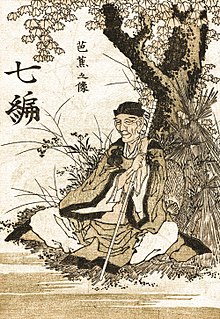
Try a haibun.Haibun (俳文, literally, haikai writings) is a prosimetric literary form originating in Japan, combining prose and haiku. The range of haibun is broad and frequently includes autobiography, diary, essay, prose poem, short story and travel journal. Usually the prose is in the present tense, not longer than 180 words, and the entire thing ends with a haiku I’m trying my bunkhouse piece in this format. You can find lots of info online about them. The Haibun Hut is a Facebook group where Haibun can be posted by anyone. The masters of the Haibun were Issa and Bashō. Here is one from Bashō (translation by Franz Wright):
As the freezing rain of early winter began falling desolately over everything, I sought warmth and company at a roadside inn. Allowed to dry my soaked clothes at the fire, I was further comforted for a time by the innkeeper who tactfully listened to me relate some of the troubles I met with on the road. Suddenly it was evening. I sat down under a lamp, taking great care with them as I produced my ink and brushes, and began to write. Recognizing my work, he solemnly requested that I consider composing a poem in honor of our one brief encounter in this world:
At an inn I am asked for identification traveler let that be my name the first winter rain




 As the freezing rain of early winter began falling desolately over everything, I sought warmth and company at a roadside inn. Allowed to dry my soaked clothes at the fire, I was further comforted for a time by the innkeeper who tactfully listened to me relate some of the troubles I met with on the road. Suddenly it was evening. I sat down under a lamp, taking great care with them as I produced my ink and brushes, and began to write. Recognizing my work, he solemnly requested that I consider composing a poem in honor of our one brief encounter in this world:
 Poetry Society of Michigan