Larry Thomas has a new book out. You can read it for free online or order a print copy from Amazon. Click on the cover image for details.
“The dream aspects of surrealism come to me naturally. Like most people, I dream frequently and vividly, sometimes so nightmarish that I force myself to wake up in order to escape the fear and horror. Interpretations of dreams are largely guesswork, Freud notwithstanding, and retelling them, impossible. But in those dreams, people, places, and happenings appear in incongruous juxtaposition and contortion providing the basis for surrealistic writings. Some of the poems in this collection are taken directly from such nocturnal experiences recollected through veiled layers of time and the continuous blanketing of subsequent happenings.” – L. W. Thomas
The ghost behind these haunted and haunting poems is the bittersweet and stunningly detailed memory of his formative years in blue-collar Detroit, echoed sometimes in his present home of Pittsburgh. The latter (much less the former) isn’t Paris, he admits, but then, “Fuck Paris.” With The Human Engineat Dawn,Jim Daniels remains among this country’s most gifted and engaging poets. —William Trowbridge, author of Call Me Fool
Jim Daniels. Singer of the broken city. Ishmael of lost families and foundered dreams. Virgil of what he calls “our poorly wired world.” These poems are deep dives into Daniels’ past, and a past Detroit. The portraits of his mother and father are unforgettable, both for their blunt, unsentimental honesty and their tenderness. Again and again Daniels manages to unearth bright shards of beauty in the bleak alleyways and poverty-haunted streets of the city. And there’s an ode here to his father’s bowling ball that will knock you down, that will roll you right back to the smoky, beer-soaked heart of the last century. The Human Engine at Dawn, in its dark and lyrical urgency, reminds me of why I came to poetry in the first place. —George Bilgere, author of Central Air
About the Author
Jim Daniels’ latest books includeGun/Shy(poetry),The Perp Walk(fiction), and the anthologyRESPECT: The Poetry of Detroit Music(coedited with M. L. Liebler). A native of Detroit, he lives in Pittsburgh and teaches in the Alma College low-residency MFA program.
With In Which We See Our Selves, Eric Torgersen begins with the formal structure of the ghazal as popularized by Agha Shahid Ali and unapologetically makes a more American thing of it, arguing in his Afterword that this transformation is as inevitable as what happens when the children of immigrant parents pass through an American junior high school: not everyone is pleased with the result. “I’ve tried to avoid faux-Eastern themes and tones,” he writes. Fluently metrical and effortlessly rhymed, at times in short, hard-hitting lines with refrains as brief as a single word, these poems leap off the page with speech as American as this: My gang all quit when I didn’t split the take right. We crashed and burned when I didn’t hit the brake right. (Click the cover photo to order from Mayapple Press)
Eric Torgersen was born in Melville, New York. He has a BA in German Literature from Cornell University; after two years in the Peace Corps in Ethiopia, he earned an MFA in poetry from the University of Iowa. He retired in the spring of 2008 after 38 years of teaching writing at Central Michigan University. He lives in Mt. Pleasant, Michigan with his wife, the quilt artist Ann Kowaleski. Since retiring, Eric has volunteered for the Chippewa Watershed Conservancy. He enjoys fishing and foraging for wild mushrooms. He is available for workshops and readings.
Mr. Torgersen is presently serving a two-year term as Honorary Chancellor of the Poetry Society of Michigan.
Spindrift suggests stuff blown onto beaches, beaches of discovery in one’s mind. When these poems show a squirrel, a fish, birds, a beggar, an Irish pub, or a dish we see these as metaphors which conjure up ideas or feelings from our own familiarity with them. A poem that begins as an abstraction, like an enemy or peace or patience, becomes objectified. Spindrift is comprised of whatever little gems might be found along the shore, examined closely to become part of the reader’s experience. These jottings of spindrift take off from that experience like going to an airport when you want to be someplace else – or like poems which say one thing when they mean another.
Laurence W. Thomas is the founding editor of Third Wednesday Magazine. He has been around long enough to know the sting of rejection and the salve of acceptance. His shelves are lined with his own publications as well as the works of many other poets. He Chancelor Emertus of the Poetry Society of Michigan.
The meadowlark, belting his song from a post on this book’s cover, is recognized across the country as a harbinger of spring. Enlivening the ambiance of this poetry collection, familiar birds represent the character and mood of its four sections: noisy jays, melodious wrens, steadfast robins, tranquil swans. While birds populate many of the poems, hardly more than a handful have birds as their subjects. The poems’ subjects derive from wide ranging personal experiences often narrated as dramatic situations, usually with something emotionally important at stake. Settings are urban and rural, delineated in finely tuned sensuous detail. Some poems are sonorously lyrical, others ironic or assertive.
“Publication of Edward Morin’s The Bold News of Birdcalls is good news not just for birders and other celebrants of the natural world, but for all poetry lovers. I love Ed Morin’s sense of place; he is a real Michigan bard, and his evocation of many familiar Michigan places amounts to a North American version of what the Irish call Dinnṡeanċas, “place lore,” the recitation of which is one of poetry’s most ancient and revered obligations. All this is accomplished with human warmth and a rare sense of empathy.” — Richard Tillinghast, author of twelve books of poetry and five of creative nonfiction, most recently Journeys into the Mind of the World: A Book of Places.
“Birds flutter, feed, and swoop through these poems: motifs that knit together subjects as closely-observed as a decaying Hallowe’en pumpkin, armed robbery at a paint store where the speaker holds short-lived employment—a narrative that had my heart in my throat!—and elegies for early-passing friends, colleagues and poet-pals from the speaker’s younger years as a university instructor. Academic politics of the corporate university also grip our attention, as does some professorial ogling! The unforgiving contrasts of northern Midwest weather serve both to warm and cool the tonalities of poems filled with self-questioning, forgiveness of others, and compelling human stories.” — Carolyne Wright, author of This Dream the World: New & Selected Poems, and lead editor of Raising Lilly Ledbetter: Women Poets Occupy the Workspace

 Larry Thomas has a new book out. You can read it for free online or order a print copy from Amazon. Click on the cover image for details.


 Eric Torgersen was born in Melville, New York. He has a BA in German Literature from Cornell University; after two years in the Peace Corps in Ethiopia, he earned an MFA in poetry from the University of Iowa. He retired in the spring of 2008 after 38 years of teaching writing at Central Michigan University. He lives in Mt. Pleasant, Michigan with his wife, the quilt artist
 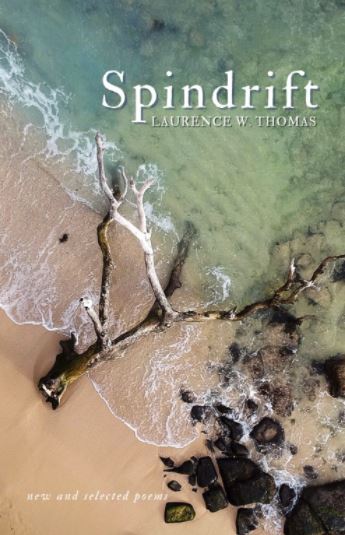 Spindrift suggests stuff blown onto beaches, beaches of discovery in one’s mind. When these poems show a squirrel, a fish, birds, a beggar, an Irish pub, or a dish we see these as metaphors which conjure up ideas or feelings from our own familiarity with them. A poem that begins as an abstraction, like an enemy or peace or patience, becomes objectified. Spindrift is comprised of whatever little gems might be found along the shore, examined closely to become part of the reader’s experience. These jottings of spindrift take off from that experience like going to an airport when you want to be someplace else – or like poems which say one thing when they mean another.
 Laurence W. Thomas is the founding editor of
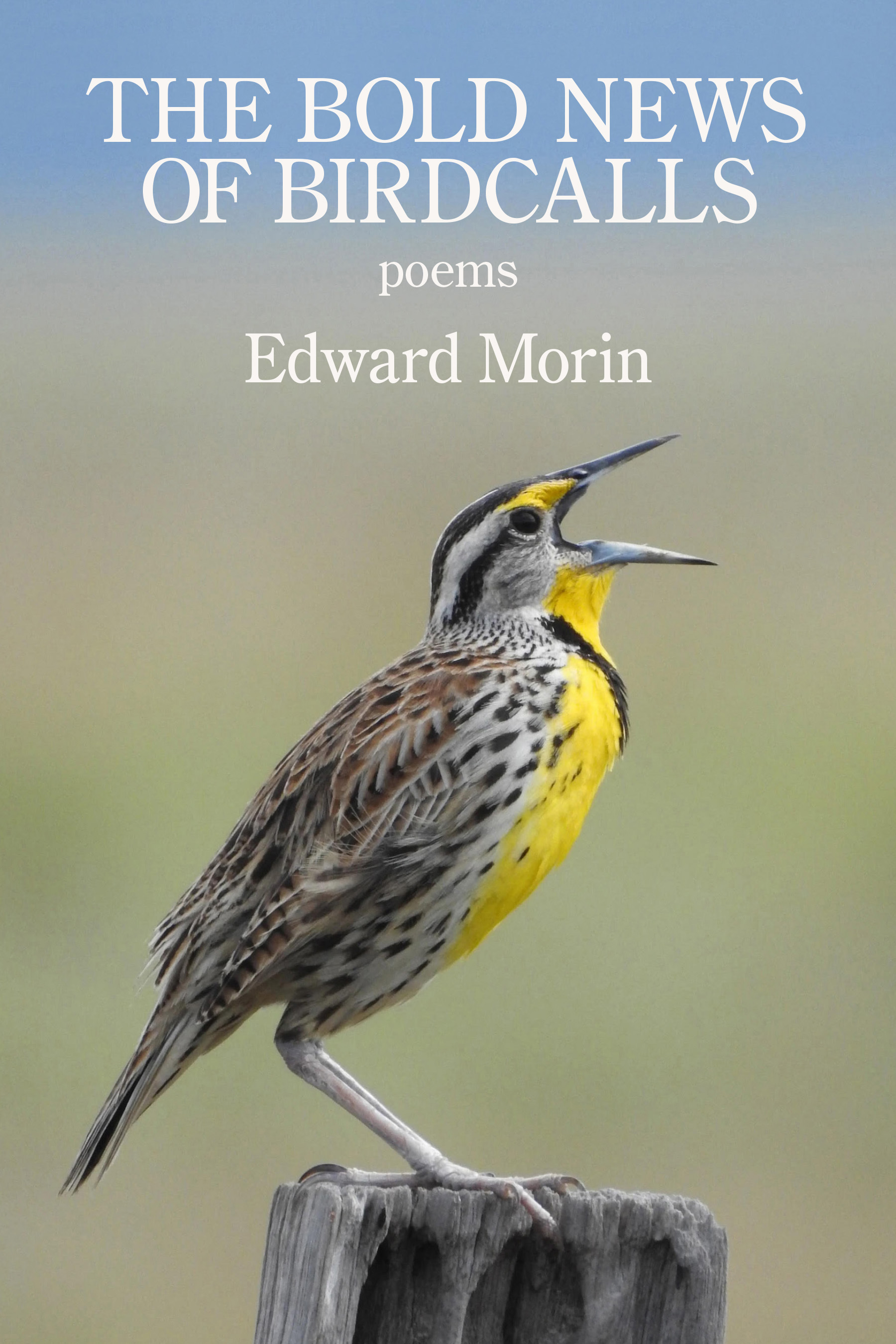 The meadowlark, belting his song from a post on this book’s cover, is recognized across the country as a harbinger of spring. Enlivening the ambiance of this poetry collection, familiar birds represent the character and mood of its four sections: noisy jays, melodious wrens, steadfast robins, tranquil swans. While birds populate many of the poems, hardly more than a handful have birds as their subjects. The poems’ subjects derive from wide ranging personal experiences often narrated as dramatic situations, usually with something emotionally important at stake. Settings are urban and rural, delineated in finely tuned sensuous detail. Some poems are sonorously lyrical, others ironic or assertive.

 Poetry Society of Michigan